Pressure Measurement & Solenoid Control System LCO100H
High-Precision Downhole Pressure Telemetry & Actuation Solution for Extreme Environments


Product Description
1. Product Overview
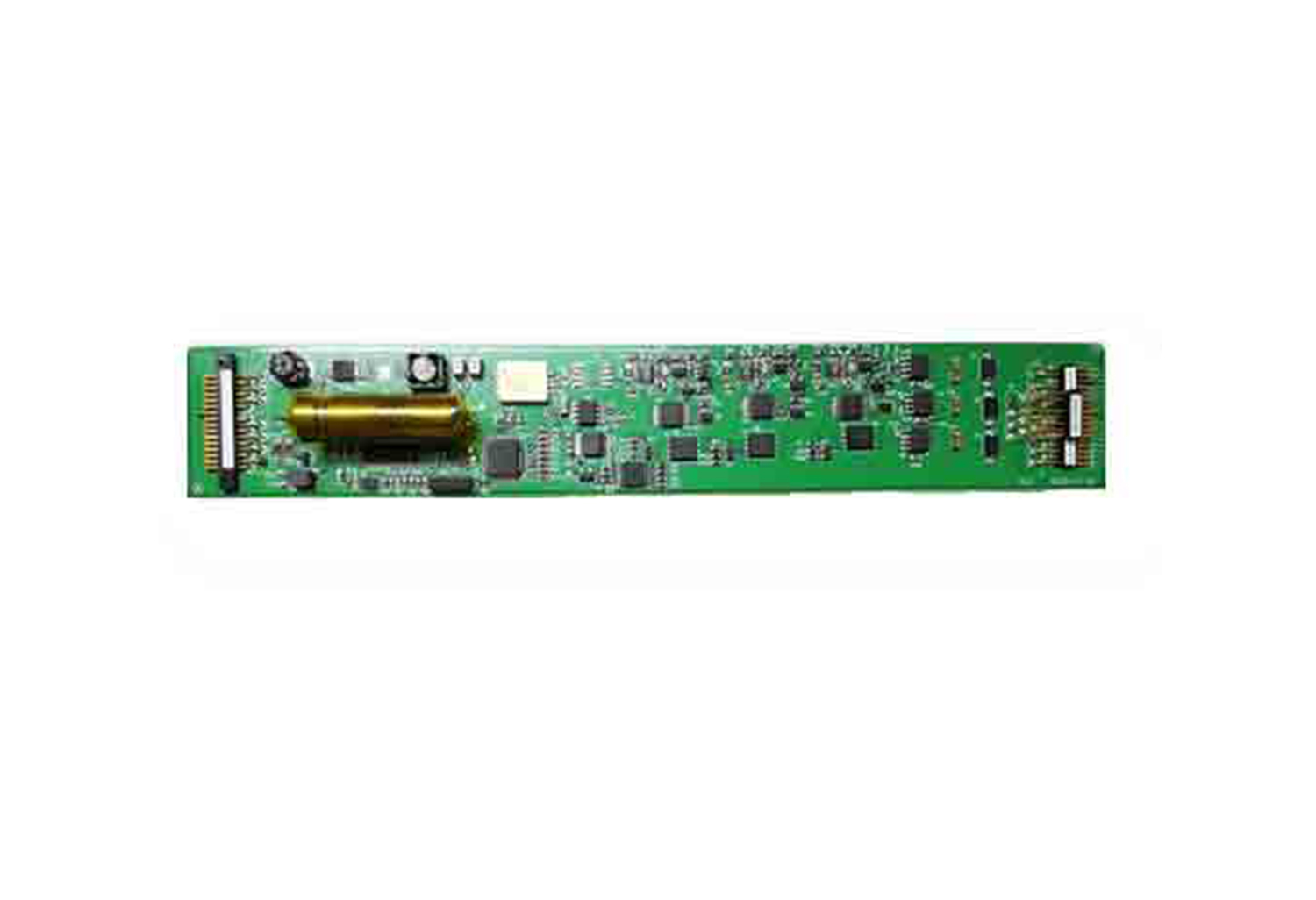
The LCO100H is a high-reliability measurement and control module engineered for the rigorous demands of MWD/LWD (Measurement/Logging While Drilling), geothermal exploration, and deep subsurface operations. The system integrates high-precision differential pressure sensing, temperature monitoring, and high-current DC solenoid valve actuation. Through multi-channel signal acquisition and closed-loop drive control, it provides real-time, high-resolution monitoring of critical downhole parameters, including pressure, temperature, voltage, and current.
The system employs a three-channel redundant architecture for both pressure measurement and solenoid actuation, offering fault-tolerant operation and high system reliability under harsh downhole conditions. Its modular design allows deployment in downhole toolstrings and can be extended to laboratory or industrial-grade Pressure Control Units (PCUs), supporting a wide range of engineering applications.
2. Key Technical Advantages
The LCO100H is a high-reliability measurement and control module engineered for the rigorous demands of MWD/LWD (Measurement/Logging While Drilling), geothermal exploration, and deep subsurface operations. The system integrates high-precision differential pressure sensing, temperature monitoring, and high-current DC solenoid valve actuation. Through multi-channel signal acquisition and closed-loop drive control, it provides real-time, high-resolution monitoring of critical downhole parameters, including pressure, temperature, voltage, and current.
The system employs a three-channel redundant architecture for both pressure measurement and solenoid actuation, offering fault-tolerant operation and high system reliability under harsh downhole conditions. Its modular design allows deployment in downhole toolstrings and can be extended to laboratory or industrial-grade Pressure Control Units (PCUs), supporting a wide range of engineering applications.
2. Key Technical Advantages
- Wide Temperature Range & Extreme Environment Compatibility
Supports operation from -40°C to +150°C, designed for high-temperature, high-pressure, and long-duration continuous operation. Critical electronic components are high-temperature rated, ensuring reliable sensor and driver circuit performance. - High-Precision Measurement & Control
- Pressure Measurement: Supports three channels of four-wire differential or absolute pressure sensors, capable of detecting micron-level pressure variations.
- Solenoid Valve Actuation: Current measurement accuracy better than 0.1 mA, enabling detection of subtle actuator state changes.
- Redundancy & Fault-Tolerant Design
Three pressure channels and three solenoid drive channels provide mutual backup, achieving multi-channel fault tolerance and enhancing overall system reliability. - Intelligent Protection & Closed-Loop Control
Features hardware-level Overcurrent Protection (OCP) and self-recovery logic. Precise actuation is achieved via high-frequency PWM (Pulse Width Modulation), allowing for fine-tuned control of flow-rates and pressure gradients. - Compact & Modular Architecture
PCB dimensions: 32 mm × 200 mm, suitable for direct integration into downhole toolstrings. Modular interfaces facilitate rapid integration with surface-level data acquisition and control systems.
3. Technical Specifications
4. Software & Monitoring Features 5. Customization & System Extension
Leveraging a modular hardware platform and mature control architecture, LCO100H supports:
| Parameter | Specification |
| Operating Temperature | -40 ℃ to +150 ℃ |
| Pressure Measurement | 3 channels, supports external four-wire differential/absolute sensors |
| Solenoid Valve Drive | 3 channels, 12V/24V DC, max 5A per channel |
| Current Measurement Accuracy | > 0.1 mA |
| Communication Interface | CAN Bus / RS-422 |
| Power Supply | ±15 V |
| Power Consumption | < 1.5 W (low-power design) |
| Physical Dimensions | 32 mm × 200 mm |
4. Software & Monitoring Features
- Real-Time Data Acquisition & Visualization
Supports synchronous acquisition of pressure, current, voltage, and temperature. Provides graphical user interface for dynamic visualization, multi-channel overlay, and trend analysis. - Closed-Loop Control & Precision Actuation
Remote configuration of PWM duty cycle and frequency via host software enables fine-tuned flow and pressure control. - Intelligent Fault Diagnostics
Automatically detects solenoid valve and sensor anomalies, logs historical fault events, and supports fault traceability and analysis. - Data Management
Historical data is stored in time-series format, supporting engineering analysis, predictive trend evaluation, and incident investigation.
Leveraging a modular hardware platform and mature control architecture, LCO100H supports:
- Form Factor Conversion – Transform the downhole elongated PCB into laboratory or industrial-grade box-type Pressure Control Units (PCU) or pressure measurement systems.
- Protocol Adaptation – Customize communication protocols for integration with existing measurement and control systems.
- Function Optimization – Hardware and firmware optimization for specific sensor types, solenoid loads, and control requirements, enhancing measurement accuracy and system reliability.