LVDT Signal Conditioner DAIL100
Industrial-Grade LVDT Conditioning Platform: All-Metal Shielded · High Interference Immunity · Multi-Wire Compatibility · Wide Input Voltage
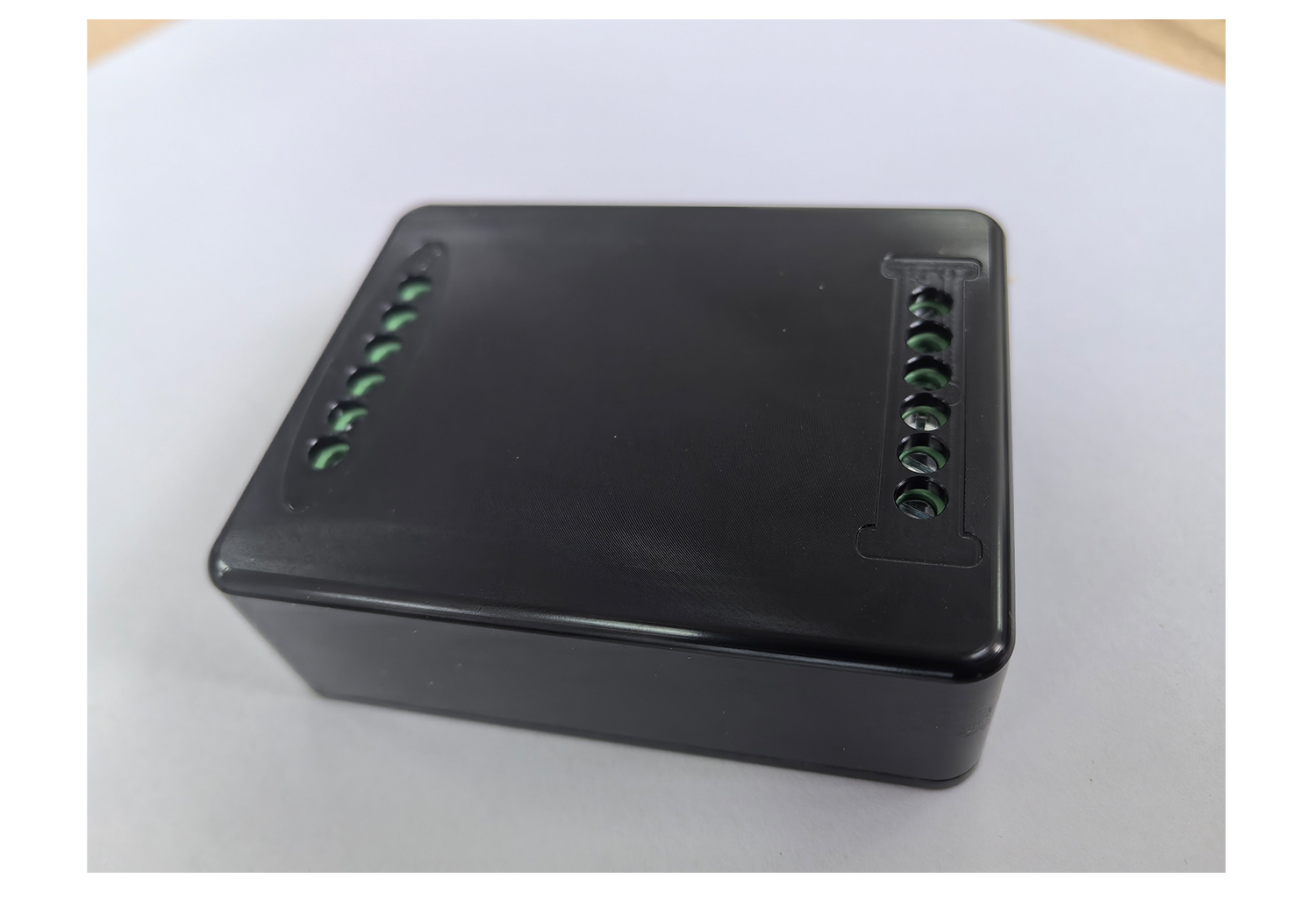
Product Description
1. Product Overview
The DAIL100 is a LVDT (Linear Variable Differential Transformer) signal conditioning module specifically designed for industrial and testing environments. The module integrates a low-distortion sine-wave excitation source, phase-sensitive synchronous demodulation, and active low-pass filtering to convert the low-level differential AC signal from an LVDT into a low-noise, linear DC output.
Unlike standard DIN-rail conditioners, the DAIL100 utilizes a full-metal shielded enclosure, providing excellent electromagnetic compatibility (EMC). Its wide input supply range (9–36 VDC) and industrial-grade temperature design make it highly adaptable to a variety of complex operating conditions, including mobile testing systems, hydraulic system monitoring, and high-precision laboratory metrology.
2. Core Advantages
4. Wiring and Commissioning Instructions
4.1 Sensor Connection
The DAIL100 is a LVDT (Linear Variable Differential Transformer) signal conditioning module specifically designed for industrial and testing environments. The module integrates a low-distortion sine-wave excitation source, phase-sensitive synchronous demodulation, and active low-pass filtering to convert the low-level differential AC signal from an LVDT into a low-noise, linear DC output.
Unlike standard DIN-rail conditioners, the DAIL100 utilizes a full-metal shielded enclosure, providing excellent electromagnetic compatibility (EMC). Its wide input supply range (9–36 VDC) and industrial-grade temperature design make it highly adaptable to a variety of complex operating conditions, including mobile testing systems, hydraulic system monitoring, and high-precision laboratory metrology.
2. Core Advantages
- Wide-Range Industrial Power Input: Supports a wide 9-36 VDC input range with built-in multi-stage power filtering and reverse polarity protection, effectively mitigating surge transients and conducted noise commonly present in industrial DC supply systems.
- Excellent Electromagnetic Shielding: Employs a full aluminum alloy shielded enclosure to provide effective shielding against high-frequency electromagnetic interference (EMI), ensuring a high signal-to-noise ratio (SNR) in harsh environments.
- Multi-Configuration LVDT Compatibility: Compatible with 4-wire, 5-wire, and 6-wire LVDT sensors, including differential full-bridge and half-bridge structures.
- Precision Zero and Span Adjustment: Features on-board high-resolution multi-turn potentiometers, allowing for continuous fine adjustment of zero and gain (span) to achieve precise linear mapping between displacement and voltage.
| Parameter | Specification | Remarks |
| Power Supply Voltage | 9 – 36 VDC | Wide voltage design, typical power consumption < 1 W |
| Excitation Signal | 1 – 5 Vrms (Adjustable) | Low-distortion sine wave, default 2.5 kHz (1-10 kHz customizable) |
| Output Signal | 0–5 V / 0–10 V / ±5 V | Supports bipolar/unipolar analog output |
| Conversion Accuracy | Non-linearity: < ±0.1% F.S. |
Excellent dynamic linear performance |
| Temperature Drift | Output drift: < 50 ppm/°C (typ.) |
Maintains stable output across the full temperature range |
| Bandwidth (-3 dB) | 250 Hz / 500 Hz (selectable) | High-frequency response models available for dynamic measurement |
| Operating Temperature | -40 °C to +85 °C | Utilizes industrial-grade components |
| Housing Characteristics | Anodized aluminum enclosure | Excellent heat dissipation and shielding properties |
4. Wiring and Commissioning Instructions
4.1 Sensor Connection
- 5-Wire/6-Wire Systems: Connect the primary excitation terminals, the secondary center tap (common reference point), and the secondary differential output terminals.
- 4-Wire Systems: Utilize internal signal conditioning circuitry to compensate for the absence of a secondary center tap.
- Zero Calibration (Zero): Position the sensor probe at the electrical null (center) position and adjust the Zero potentiometer until the output reads zero.
- Full-Scale Calibration (Span): Move the probe to the upper limit of its nominal stroke and adjust the Gain/Span potentiometer until the desired full-scale output (e.g., 10 V) is reached.
- Industrial Precision Manufacturing & Machining
- Typical Equipment: CNC machine tools, injection molding machines.
- Application: For spindle axial runout and thermal growth monitoring, closed-loop control of slide positions, and positioning error compensation. Supports clamping stroke control in injection molding machines, highly repeatable feedback for ejector pin positioning, and mold safety interlocking.
- Fluid Power & Electro-Hydraulic Control
- Typical Equipment: Electro-hydraulic servo valves, heavy-duty hydraulic cylinders.
- Application: Pairs with high-frequency response electro-hydraulic servo valves for high-speed closed-loop feedback of spool displacement. Suitable for hydraulic cylinder stroke monitoring in high-EMI and high-vibration environments, compliant with industrial EMC requirements.
- Aerospace & Structural Testing
- Typical Systems: Actuators and structural test platforms.
- Application: Provides closed-loop displacement feedback and prognostics and health management (PHM) for steering gears and landing gear actuators. Applied in structural strength testing, wind tunnel model displacement measurement, and precision monitoring of crack opening displacement (COD/CMOD).
- Automotive Engineering & Automated Inspection
- Typical Scenarios: Power battery production lines, complete vehicle testing.
- Application: Used for online monitoring of battery electrode thickness, measurement of brake disc axial runout, and 100% in-line inspection of critical dimensions. Supports suspension system stroke and pedal displacement data acquisition, directly compatible with onboard 12V/24V power systems.
- Energy & Heavy Equipment
- Typical Equipment: Turbomachinery, steam turbines.
- Application: Applied in the online monitoring of turbine casing expansion displacement, hydraulic servomotor stroke, and control valve opening (VMS), providing high-precision displacement data for condition monitoring and life-cycle maintenance.