SEOM300H High-Temperature Three-Axis AMR Magnetoresistive Sensor
A High-Accuracy Azimuth and Toolface Measurement Solution for Oil & Gas Drilling and Extreme Industrial Environments
Product Description
1. Product Overview
The SEOM300H is an industrial-grade three-axis Anisotropic Magnetoresistive (AMR) magnetic field sensing subsystem engineered for directional drilling, Measurement While Drilling (MWD), and Logging While Drilling (LWD) applications in oil and gas exploration and development.
The system integrates high-sensitivity AMR bridge sensors with a precision low-noise Analog Front End (AFE), consisting of instrumentation-grade differential amplifiers, anti-aliasing filters, and a 24-bit high-resolution sigma-delta ADC. This signal-conditioning chain ensures high dynamic range, low total harmonic distortion (THD), and high-fidelity digitization of three-axis geomagnetic field vectors.
A high-performance floating-point DSP performs real-time vector normalization, tilt compensation, temperature compensation, and toolface angle computation based on magnetic vector reconstruction algorithms. The computational architecture is optimized for deterministic latency and numerical stability, enabling continuous operation in downhole environments up to 175 °C under severe vibration and shock loading.
As a core downhole attitude sensing subsystem, the SEOM300H outputs:
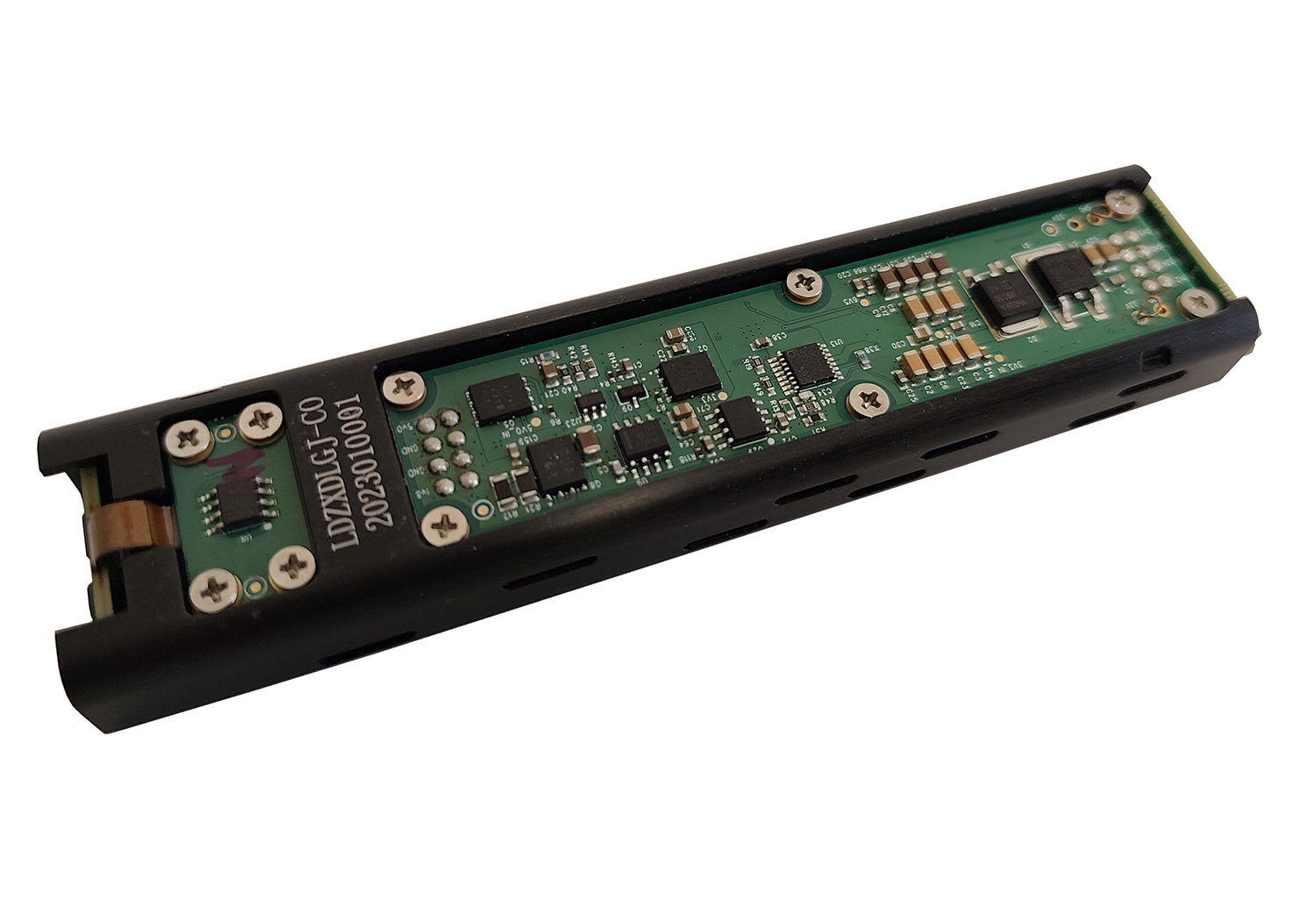
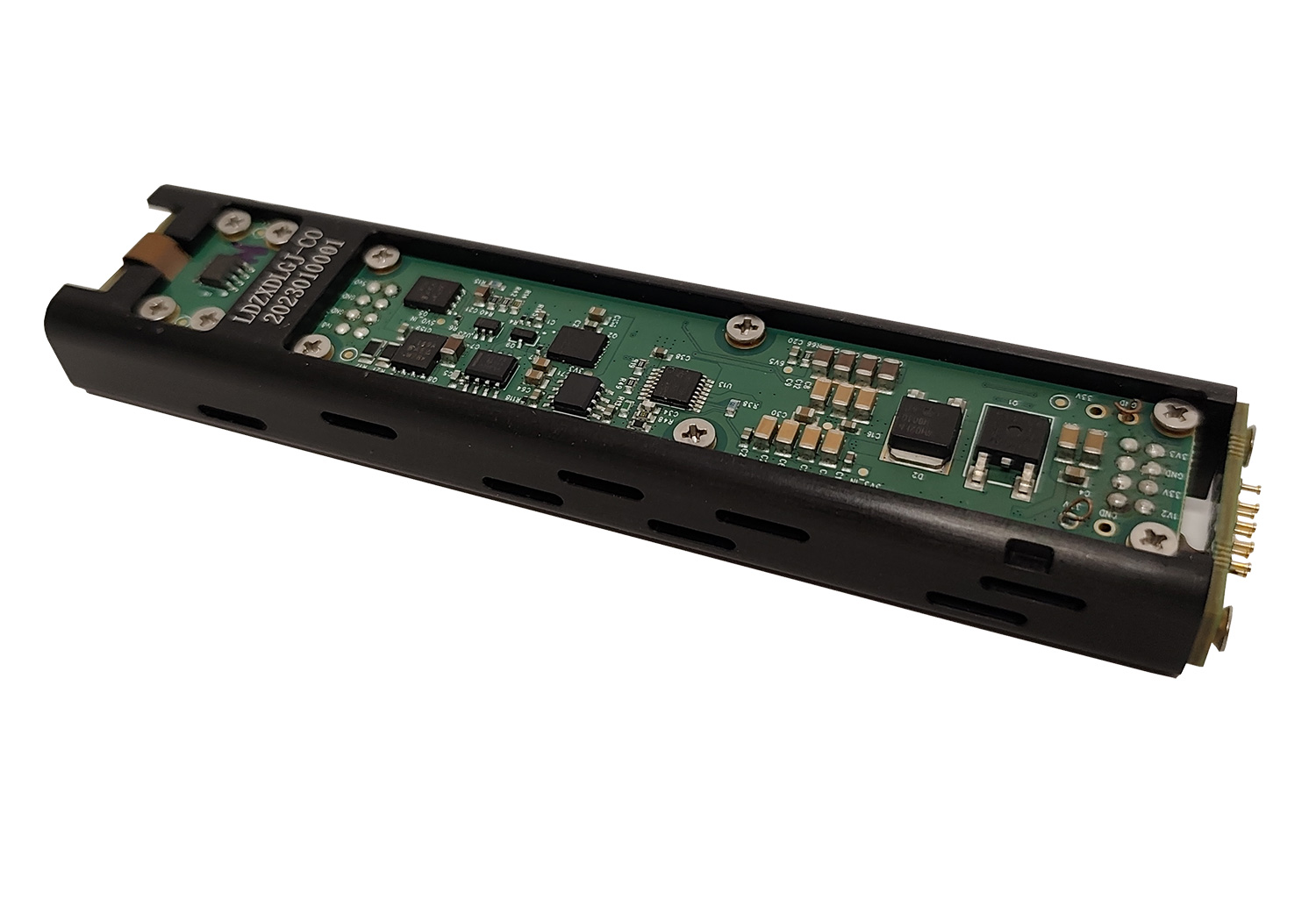
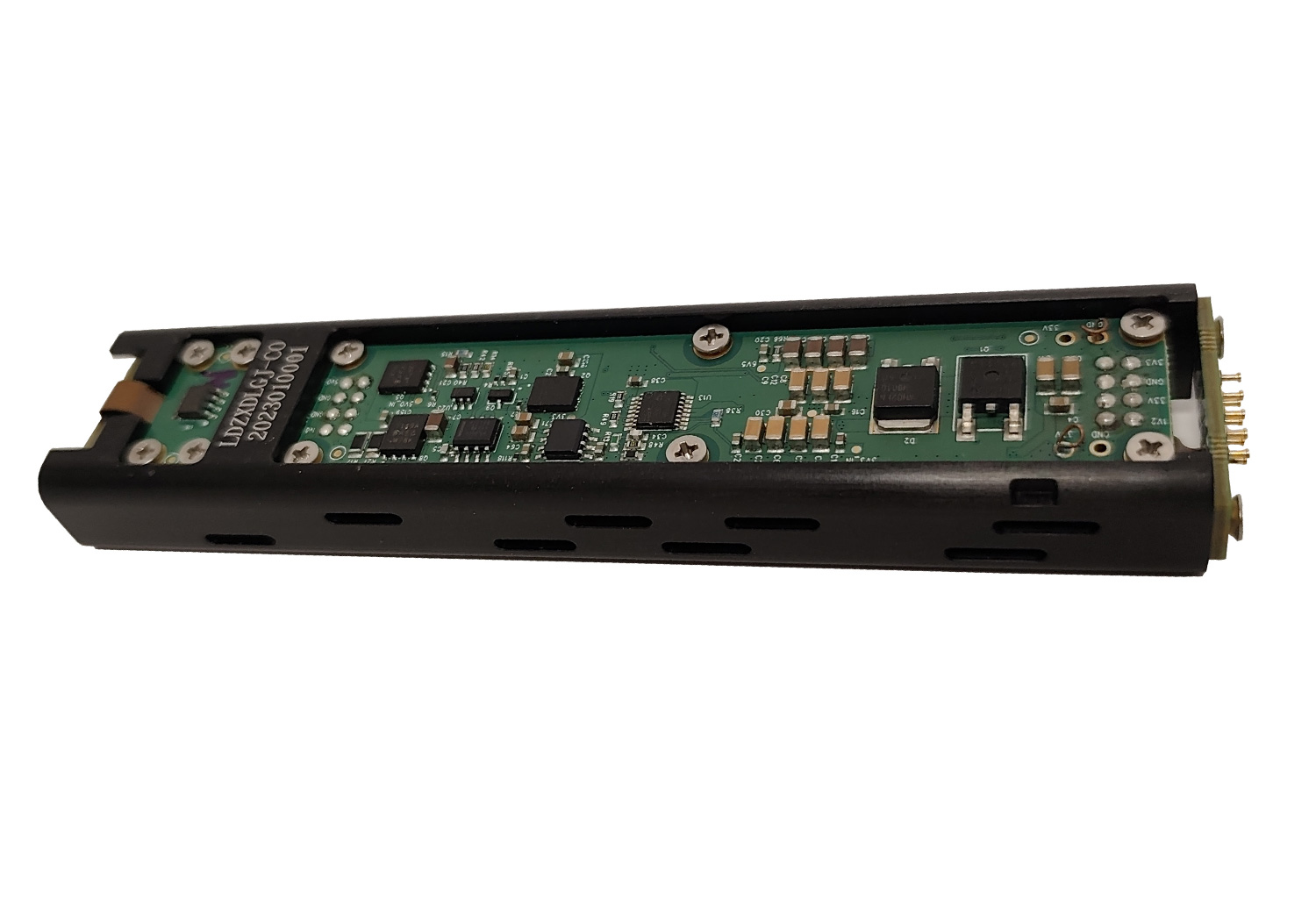
The mechanical and electronic architecture adopts a rigid-flex PCB topology. Power management circuitry is physically isolated from digital acquisition and sensing circuits, minimizing conducted and radiated electromagnetic interference (EMI). Flexible interconnections optimize volumetric efficiency within constrained drill collar assemblies while improving mechanical resilience against high-g shock and torsional vibration.
2. Core Advantages
2.1 Extreme Environmental Robustness
2.2 High Integration and Modular Architecture
2.4 Low Power Consumption and Efficient Power Management
2.5 Industrial-Grade Communication and Data Management
4. Technical Specifications
5. Typical Applications
The SEOM300H is an industrial-grade three-axis Anisotropic Magnetoresistive (AMR) magnetic field sensing subsystem engineered for directional drilling, Measurement While Drilling (MWD), and Logging While Drilling (LWD) applications in oil and gas exploration and development.
The system integrates high-sensitivity AMR bridge sensors with a precision low-noise Analog Front End (AFE), consisting of instrumentation-grade differential amplifiers, anti-aliasing filters, and a 24-bit high-resolution sigma-delta ADC. This signal-conditioning chain ensures high dynamic range, low total harmonic distortion (THD), and high-fidelity digitization of three-axis geomagnetic field vectors.
A high-performance floating-point DSP performs real-time vector normalization, tilt compensation, temperature compensation, and toolface angle computation based on magnetic vector reconstruction algorithms. The computational architecture is optimized for deterministic latency and numerical stability, enabling continuous operation in downhole environments up to 175 °C under severe vibration and shock loading.
As a core downhole attitude sensing subsystem, the SEOM300H outputs:
- Toolface angle
- Three-axis magnetic field components
- Temperature data
- System diagnostic status
The mechanical and electronic architecture adopts a rigid-flex PCB topology. Power management circuitry is physically isolated from digital acquisition and sensing circuits, minimizing conducted and radiated electromagnetic interference (EMI). Flexible interconnections optimize volumetric efficiency within constrained drill collar assemblies while improving mechanical resilience against high-g shock and torsional vibration.
2. Core Advantages
2.1 Extreme Environmental Robustness
- Long-term stable operation over a wide temperature range of –40 °C to 175 °C
- High-temperature-rated industrial components ensure thermal stability
- Optimized temperature drift compensation mechanisms suppress offset drift and gain drift
2.2 High Integration and Modular Architecture
- Rigid-Flex PCB technology enables physical isolation of the sensing module, digital processing module, and power supply module
- Reduced inter-module crosstalk enhances signal integrity and overall system stability
- Modular architecture facilitates rapid integration into MWD, LWD, and directional drilling systems
- Orthogonal X/Y/Z spatial configuration enables full-vector geomagnetic field acquisition
- Fully differential analog signal chain design improves Common-Mode Rejection Ratio (CMRR) and enhances electromagnetic interference (EMI) immunity
- Combination of low-noise amplifiers and high-linearity ADC ensures high Signal-to-Noise Ratio (SNR) data acquisition
- Integrated automatic Set/Reset calibration control circuitry periodically re-magnetizes the AMR bridge arms to eliminate hysteresis and nonlinearity errors
2.4 Low Power Consumption and Efficient Power Management
- Typical system power consumption < 1.75 W
- Wide input voltage range: 12–36 V DC
- Multi-stage low-noise power architecture independently supplies the analog front end, DSP core, and communication modules
- Optimized power routing design minimizes ripple and power-supply-induced noise coupling into the measurement chain
2.5 Industrial-Grade Communication and Data Management
- Dual-redundant CAN bus interfaces for real-time downhole data transmission
- High-speed differential signal reception interface suitable for long-distance or high-noise communication environments
- Onboard 64 Mbit industrial-grade NOR Flash for parameter configuration, calibration data, and operational log storage
- Integrated high-temperature temperature sensor for thermal compensation and system health monitoring
| Functional Module | Technical Description |
| Three-Axis Magnetic Measurement | High-fidelity X/Y/Z magnetic vector acquisition with fully differential low-noise signal chain |
| Intelligent Sensor Control | Automatic Set/Reset self-calibration with dynamic compensation for hysteresis and nonlinearity |
| Digital Processing | High-performance floating-point DSP for real-time toolface and attitude computation |
| Power Management | Wide 12–36 V input with multi-stage, low-noise regulated outputs |
| Communication Interface | Dual CAN bus interfaces |
| Data Storage | 64 Mbit NOR Flash supporting redundant logging and firmware upgrades |
| Structural Design | Rigid power PCB + rigid-flex digital/sensor PCB for enhanced vibration and shock resistance |
4. Technical Specifications
| Parameter | Specification |
| Operating Temperature | –40 °C to +175 °C |
| Measurement Axes | 3-axis (orthogonal X, Y, Z) |
| Input Voltage | 12–36 V DC |
| Power Consumption | < 1.75 W |
| Communication Interface | 2 × CAN Bus |
| Storage Capacity | 64 Mbit NOR Flash |
| Digital Resolution | 24-bit ADC |
| Output Data | Toolface angle, 3-axis magnetic field, temperature, system status |
| Mechanical Structure | Rigid power board + rigid-flex digital/sensor board |
5. Typical Applications
- Oil & Gas Drilling: Core sensing module in MWD/LWD systems for directional and horizontal wells.
- Rotary Steerable Systems (RSS): Real-time toolface and inclination computation for closed-loop directional control.
- Mineral & Geothermal Exploration: High-precision downhole compass and azimuth measurement systems.
- Extreme Industrial Magnetic Field Monitoring: Magnetic field detection in high-temperature, high-vibration, and high-EMI environments.